
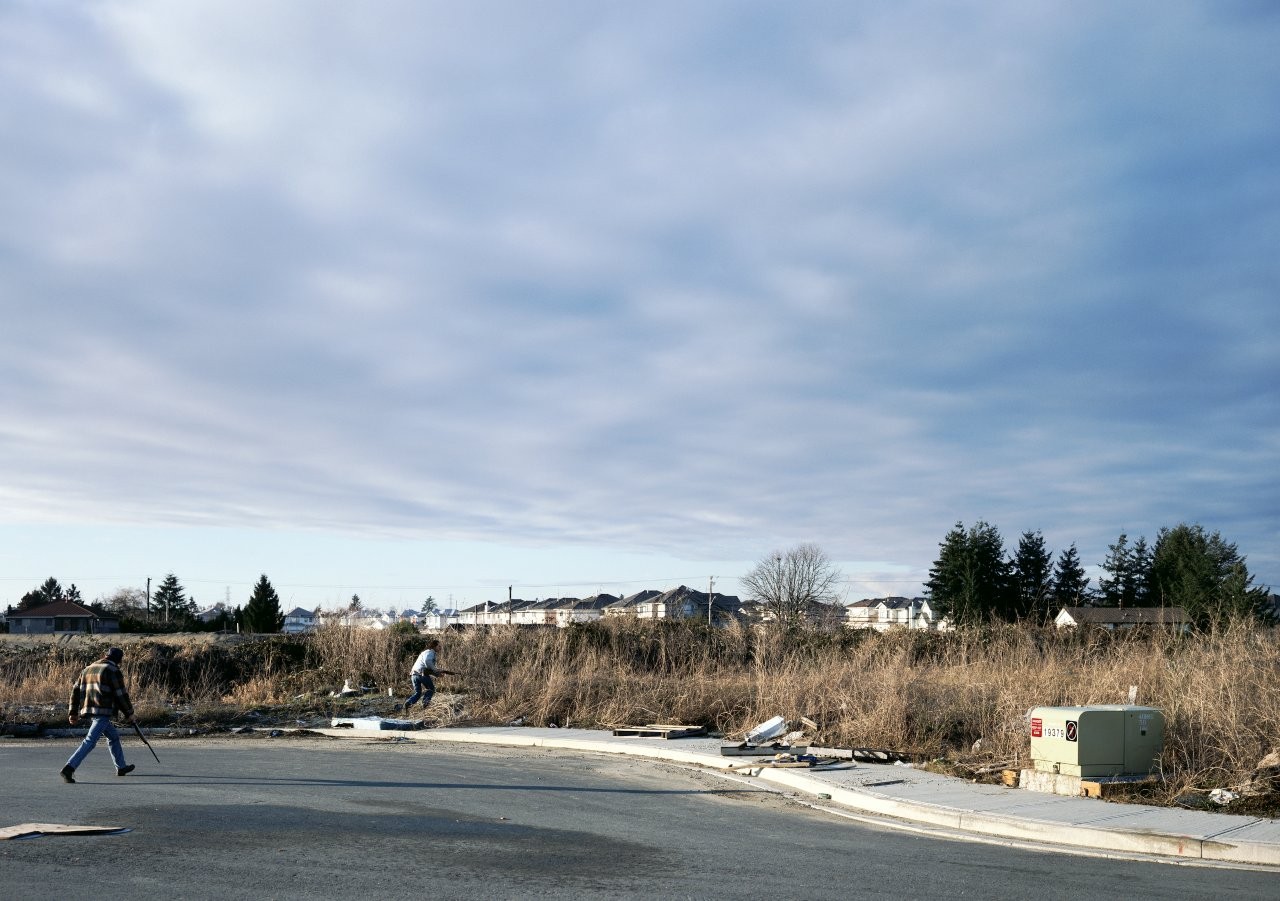
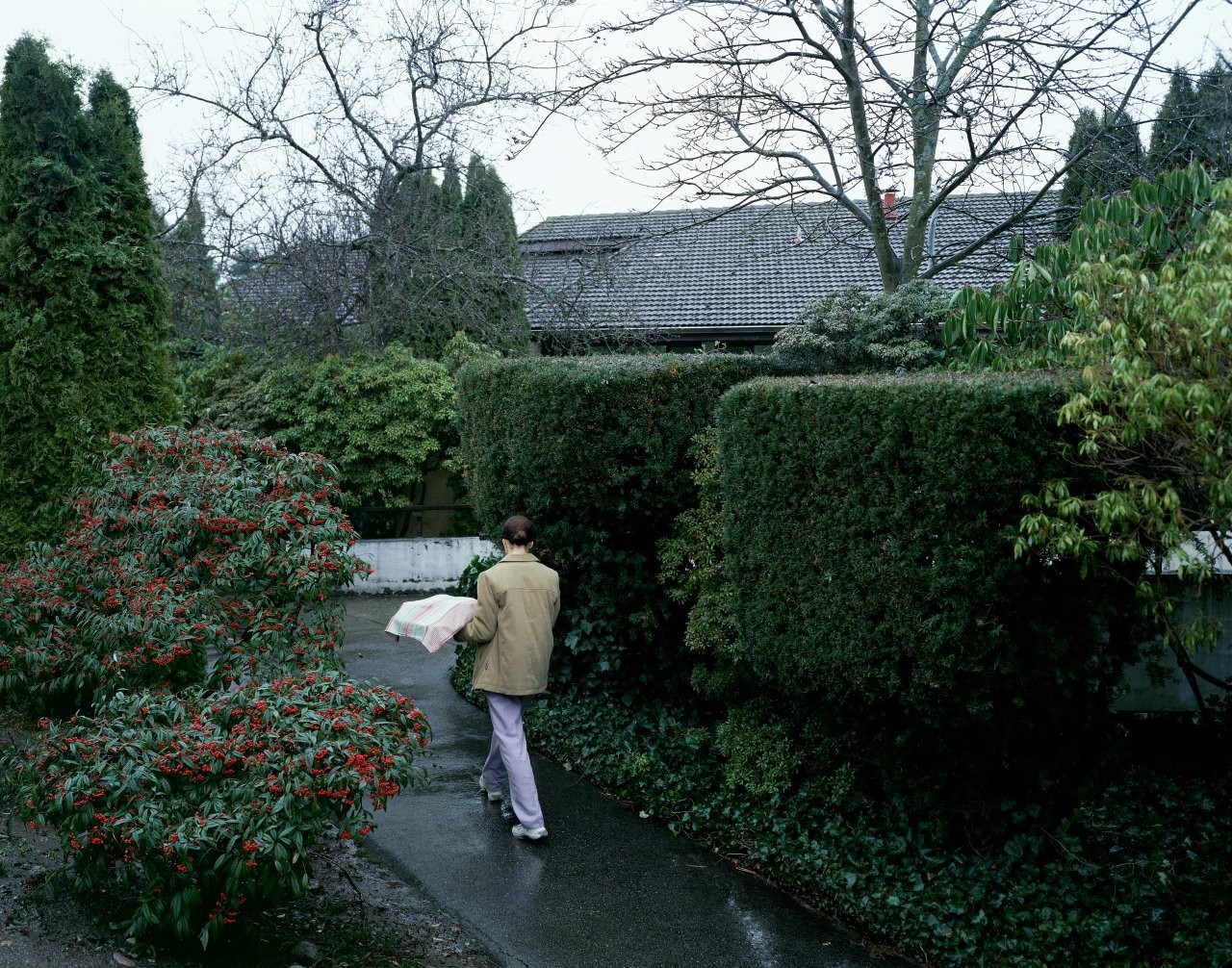
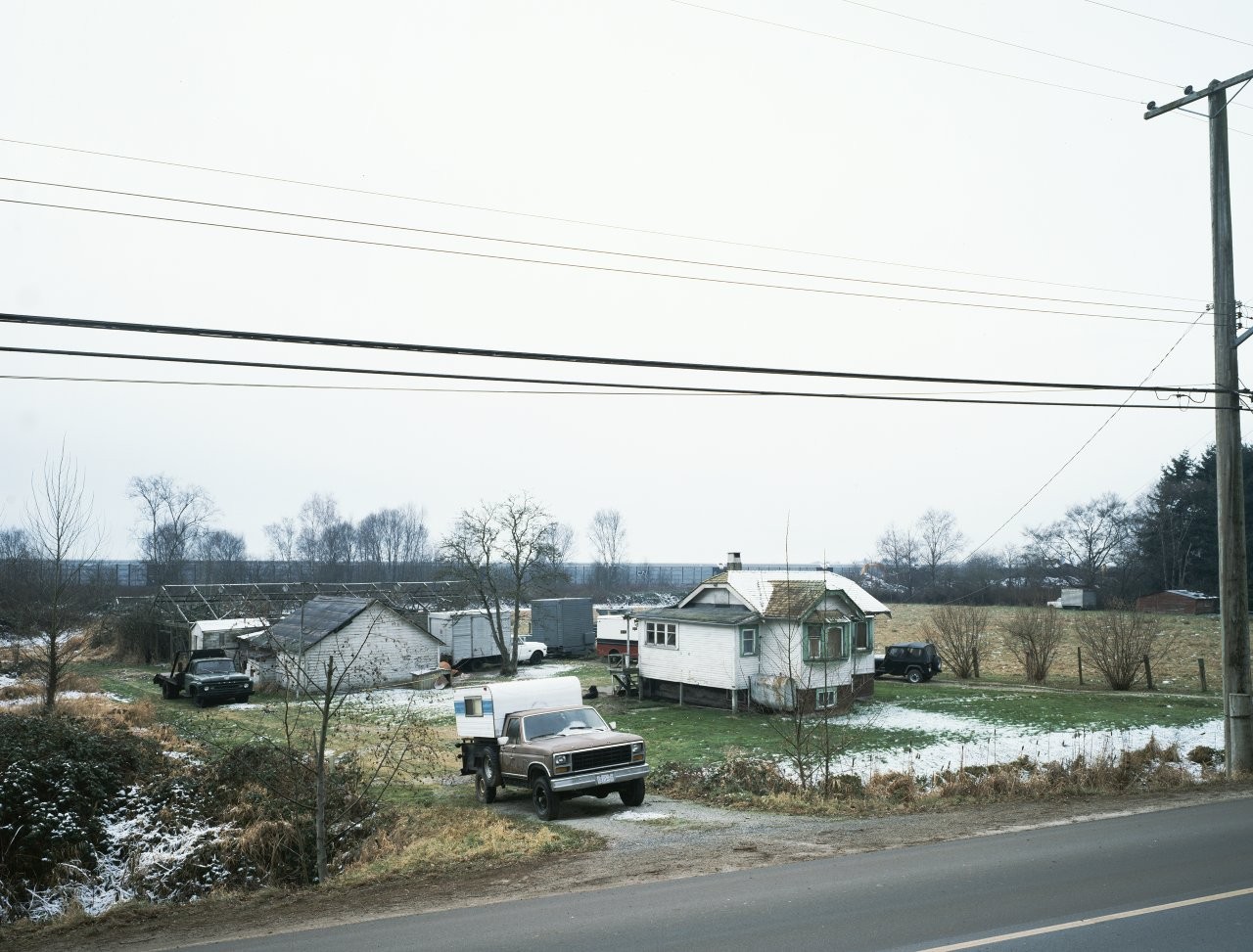
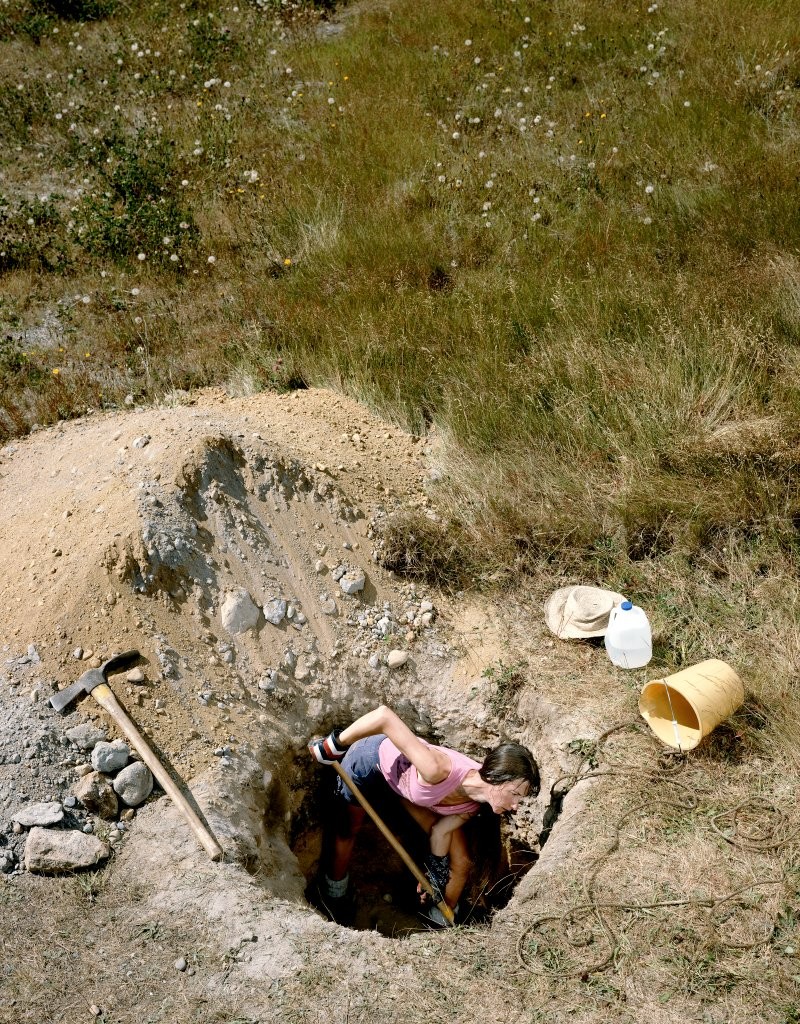
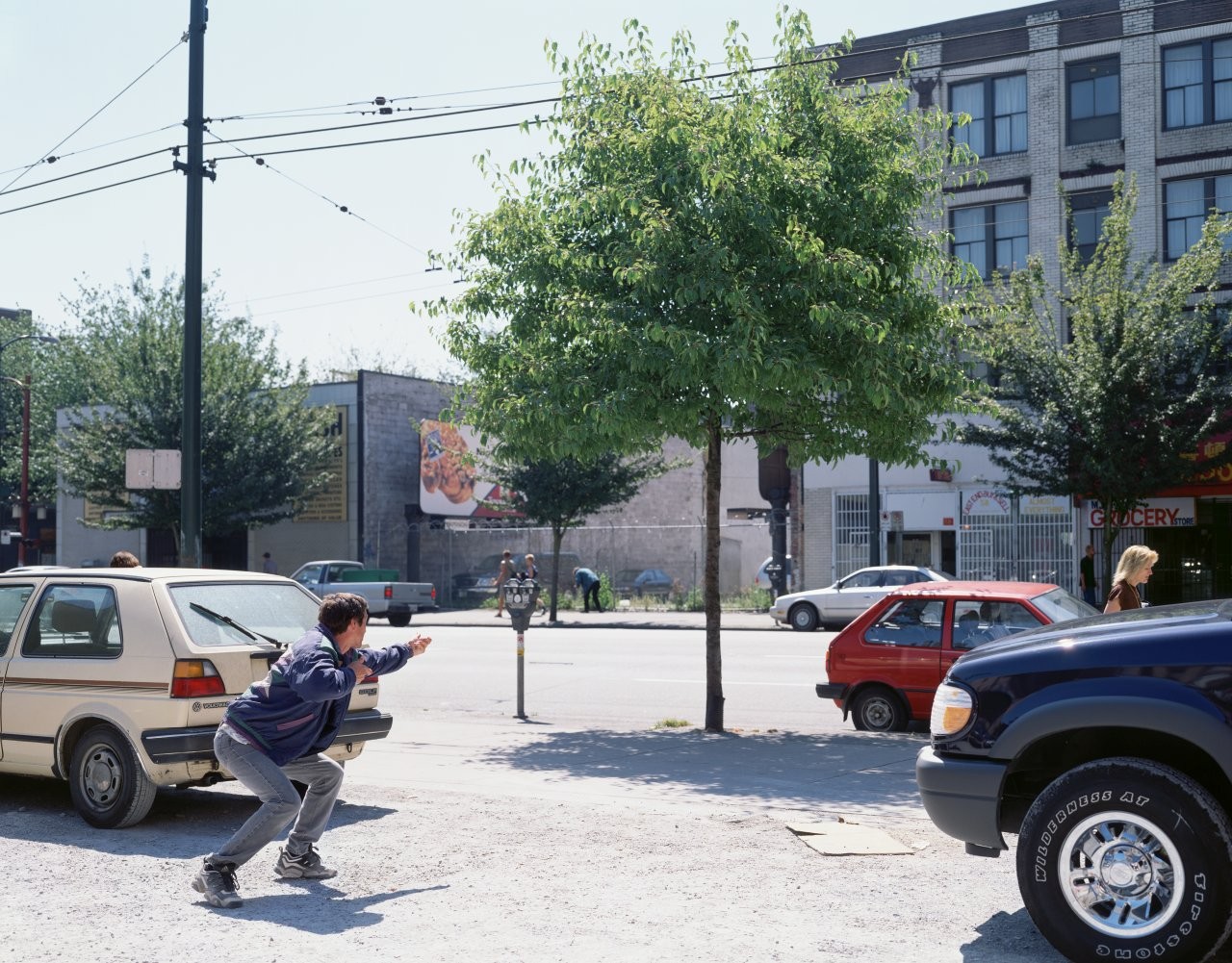
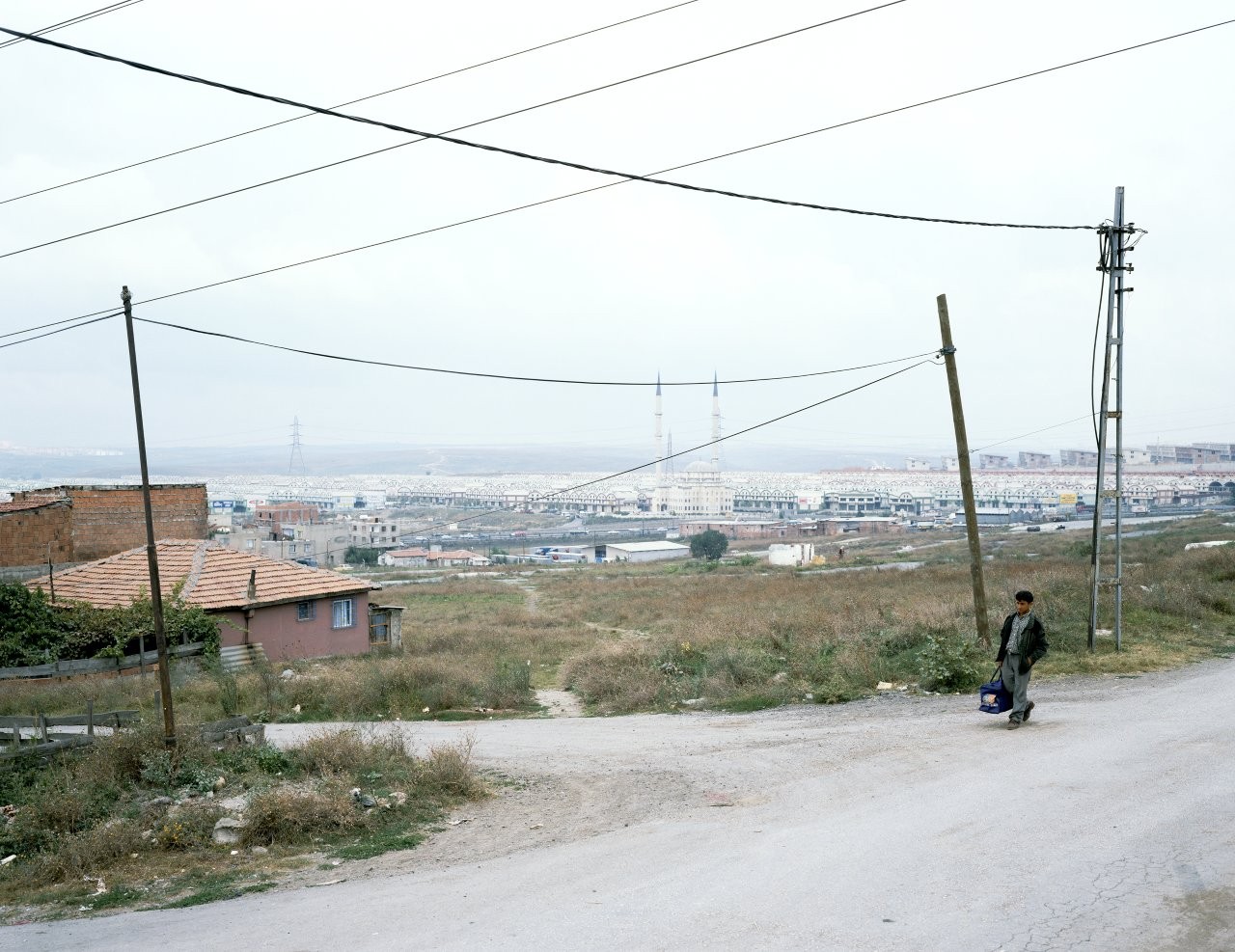
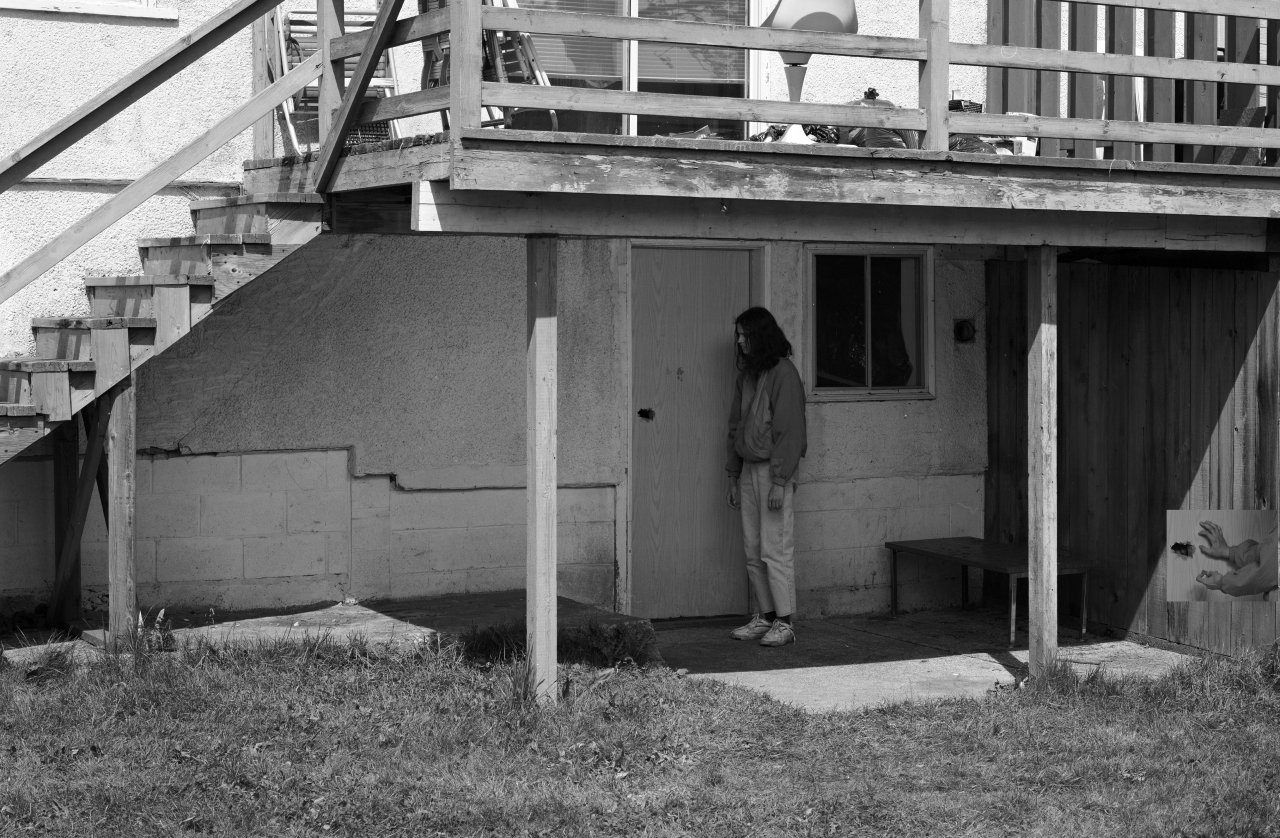
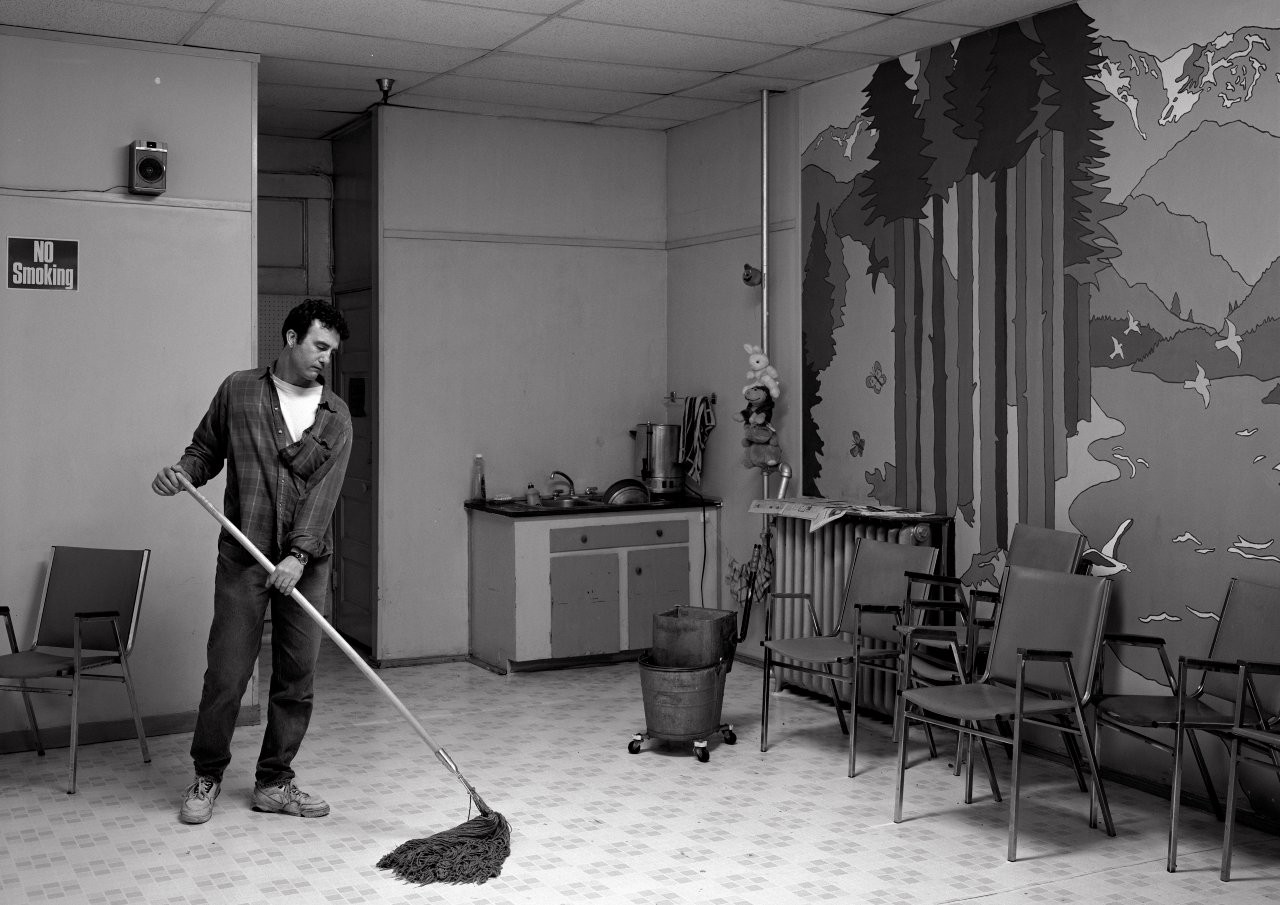
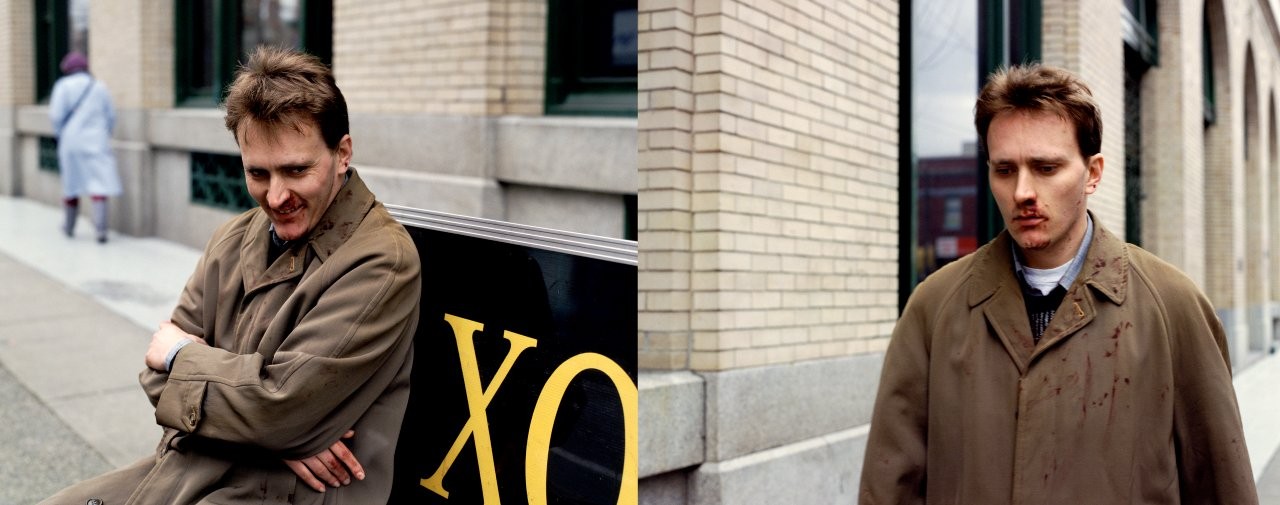
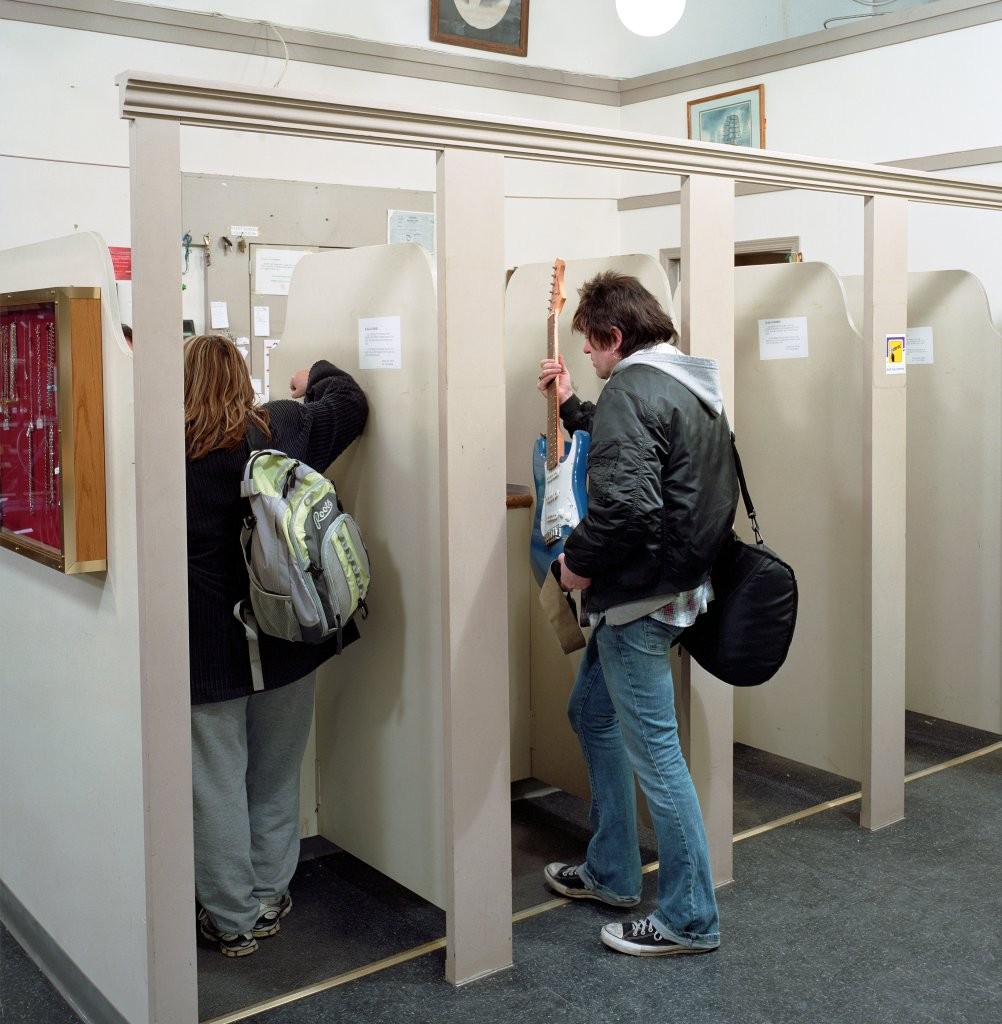
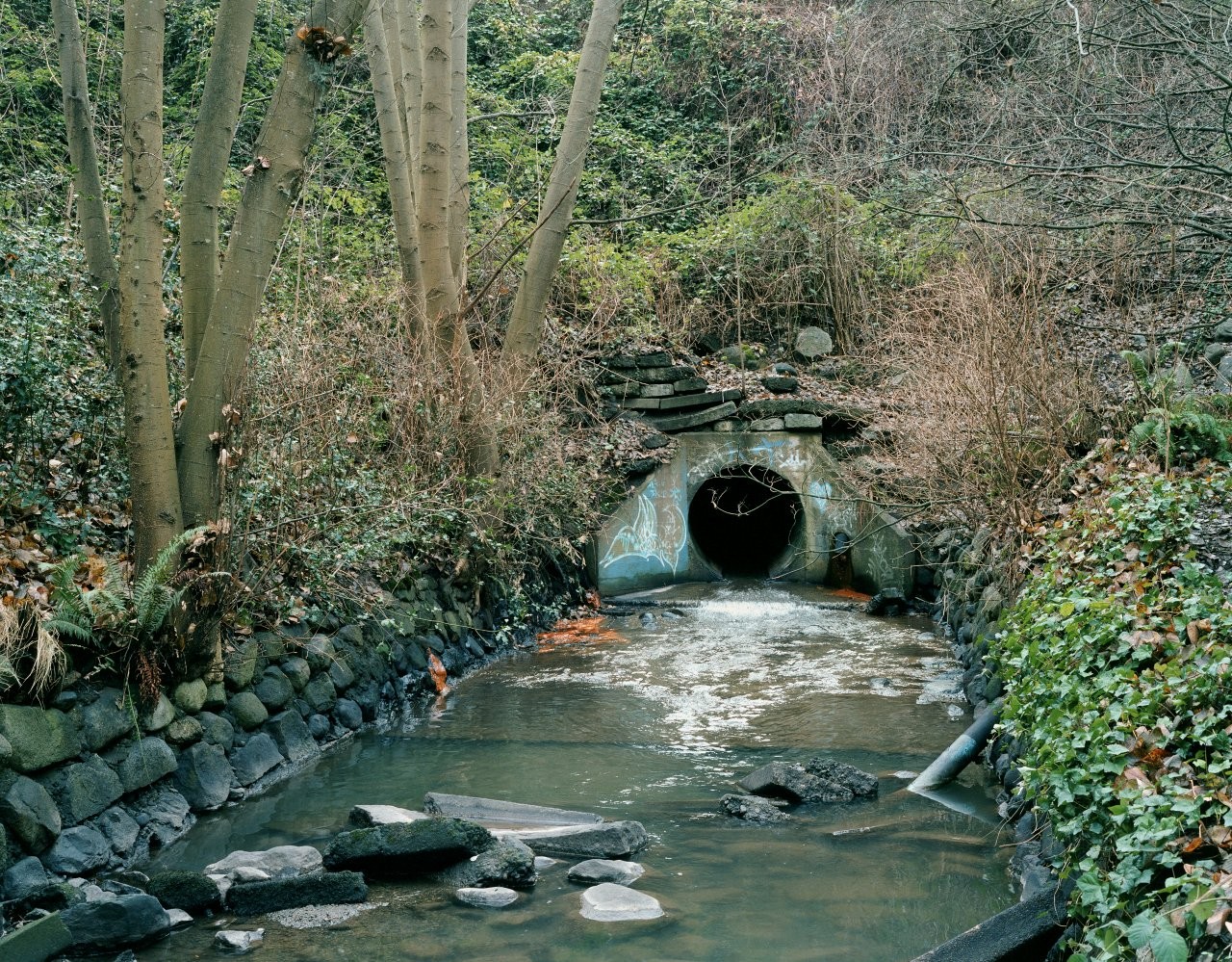
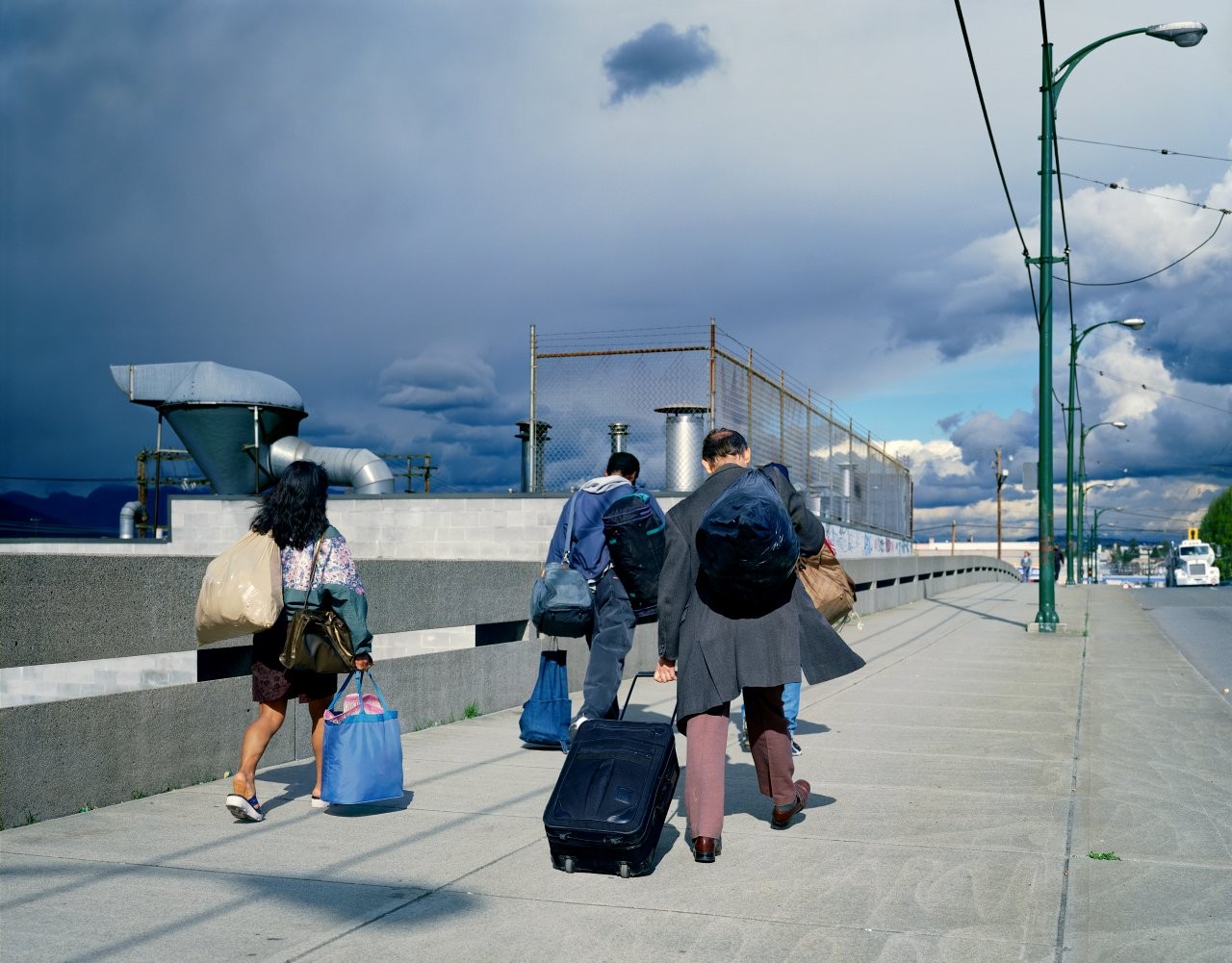
Jeff Wall was born 1946 in Vancouver, where he still lives and works. His photographs have been exhibited worldwide over the past forty years. His pictures often depict events the artist has witnessed and reconstructed in a process he calls “cinematography.” His subject matter ranges from everyday occurrences photographed in real places to imaginary situations composed in a studio. Jeff Wall is considered to be one of the artists, who since the 1970s has led the way in emphasizing the affinities between photography, painting, and cinema. He taught art at universities in Canada for twenty-five years, and his critical writing has been collected and published in several languages. His work has been the subject of numerous and important retrospective exhibitions around the world.
Neon light boxes, that we encounter in everyday life at bus stops, in train stations, and at airports, became an integral part of Jeff Wall’s artistic routine from 1978 onward, and for around 30 years—together with large-format transparancies—constituted a central component of his work. It was not until 1996 that he added large black-and-white photographs. These were later followed by inkjet or light-jet color photographs, in other words laser prints on photographic materials.
In this way, Jeff Wall transported everyday objects into the art space. He adapted an ordinary urban phenomenon and means of communication and transferred it into art. This decision allowed him to establish a relationship between the outside world and the “inner world,” that is to say, between everyday life and the art world, and to animate the art space with light boxes and powerful lighting.
This was a conceptual decision on the interface between Conceptual Art, which Wall had practiced in the 1960s, and the new world of media images. But in striking contrast to the (radical) reductionism of Conceptual Art at that time, he did not fill the aluminum frames with either minimal color fields or pithy statements. Instead, he filled the frames with luminous photo-figurative abundance, with colorful photographic scenarios. On the one hand, Jeff Wall opted, conceptually, for the metal light box and, on the other hand, pictorially, for the tableau—for the cinematographic scenario, as he likes to call it.
Jeff Wall made a clear decision for the image, right in the midst of an iconoclastic epoch, when almost every aspect of the pictorial was picked to pieces. He believed and obviously still believes in the power of the complex, individual, life-size image, the tableau as he puts it, facing the viewer, allowing them to immerse themselves in it, explore it, and expand upon it, as it vehemently fires their imagination.
What is also striking in his entire oeuvre, but even more so in the selection of works for this exhibition, is the extent to which Jeff Wall deals visually and thematically with the lower classes. Not with society’s winners, but much more with people who are suffering, who have to work and to fight. He partly attributes this to where his workplace is situated in Vancouver—in the middle of a neighborhood in which there are many homeless and needy people. His studio’s location brings him into constant contact with people who are destitute and in distress, even though he tries to avoid ideological or aesthetic constraints in his work.
From the outset, Jeff Wall created very singular, open-ended, complex, and sometimes enigmatic constellations in his pictorial scenarios. But he does not see himself as a storyteller, he does not guide us, rather he offers, presents, and calls for the empowerment of the observer. Almost as if the primary focus were on asking the right questions rather than providing answers. “When I create these staged images, I don’t tell the beginning or the end of the story, only the middle. If you added the denouement then the picture wouldn’t do what it’s supposed to do ... (...) It’s only within this game of uncertainty that, what we call a picture, is possible at all.” However, the artist's offer also places a demand on us as viewers: to engage intensively with the elements within the image.
The term that Wall uses for this kind of picture, of pictorial experience, is “cinematographic,” an term that is, first and foremost, a reference to cinema, that is to say, to moving—not still—images. He does this intentionally, with conviction. Film, as Wall has said, is ultimately just a progression of still images, at least twenty-four per second, at which point, to the human eye, it looks as if they are starting to move. The term however does not only refer to this but to the scenarios that we see in films and, here, in Jeff Wall’s images as well, to situations in which something happens or could happen, depending on how we see things. In Wall’s works we, as viewers, have a certain freedom—to act like a director and imagine possible levels of meaning and test them against the image.
Jeff Wall himself says that, as a result, people often assume that he meticulously plans everything down to the smallest detail, but in fact the opposite is true. He decides on the setting and hires the performers. These can be professional actors, but they may also be acquaintances or people he has met by chance and selected. He then simply instructs the actor(s) to go through certain processes, sometimes over long periods of time. And Jeff Wall photographs these situations which, as they meander slightly, are created anew time and again. Dozens of times, hundreds, or thousands of times, until he has the feeling that it’s enough, that it’s worked. In other words, the image is constantly being recreated in slightly different variations. Only at the very end, during the processing stage, is the decision made on one or the other of the many variants that will become the final work.
Charles Baudelaire is often referred to as a painter of modern life. Jeff Wall could, analogously, be described as a visualizer of a postmodern, late capitalist life. Living, working, surviving: an endless and sometimes cruel cycle as well, often with more losers than winners.
Curator: Urs Stahel